Exploring the Past:
Bender Melon Farm Preserve
CHARLES BENDER AND THE FAMOUS BENDER MELON
In early 1884, 24-year-old Charles Bender began working to hybridize a musk melon variety hoping to capture in one melon a superior sweet flavor combined with a sturdy rind for transport. After 17 years of breeding and experimentation with cultural practices, he felt he had reached his goal with a melon variety he called Golden Queens, a delicious golden orange fleshed melon with deep sturdy ribs. As they rose in popularity and fame, the melons become known simply as “Benders."
Charles Bender worked tirelessly to improve the quality of his melons and to market them far and wide. He traveled to New York City with barrels of ripe melons, visiting hotels and fine restaurants, giving samples. His efforts paid off and Bender Melons were featured in the best spots in New York City. Closer to home, they were wildly popular in Saratoga during the racing season. Because they held up so well during shipping, they even crossed the Atlantic and were sold in England and France.
The melons were sold in few retail places locally, so many people drove out to the farm to buy them. Especially on weekends during the harvest season, cars lined the roadway as families combined a country outing with a chance to purchase the famous melons.
Charles Bender was protective of his seed, always cutting the melon and scooping the seed before handing it over to a customer. There were no patents on varieties in those days, so competitors could use his seed to grow melons under a different name. Once the seeds were dried and sorted, they were stored under lock and key! Much of Charles Bender’s success was credited to the cultural techniques he developed for growing his prized melons. People said he coddled his vines like children.
The seedlings were started in greenhouses and planted in the fields as early as possible. To protect his delicate plants, Bender constructed individual cold frames to cover the plants. The glass was removed on warm days and then replaced in the evenings to keep the plants from the chill night temperatures in the early season. The cold frames and all the extra tending they required allowed the plants to get growing and fruiting earlier, which gave a competitive edge in the market.
All weeding was done by hand and during dry periods, workers carefully ladled water on to each plant. He raised hogs for meat, but also for their manure which was used to fertilize the vines. Charles said it was the best manure to use because it wouldn’t burn the roots of the plants. Later in the season, as the melons matured, they were place on a wooden plate to protect the rind from the damp ground and to ensure a perfect looking fruit.

Historic image of the cold frames being used to cover each melon seedling. The glass tops were removed on warm days and replaced before cooler nights.
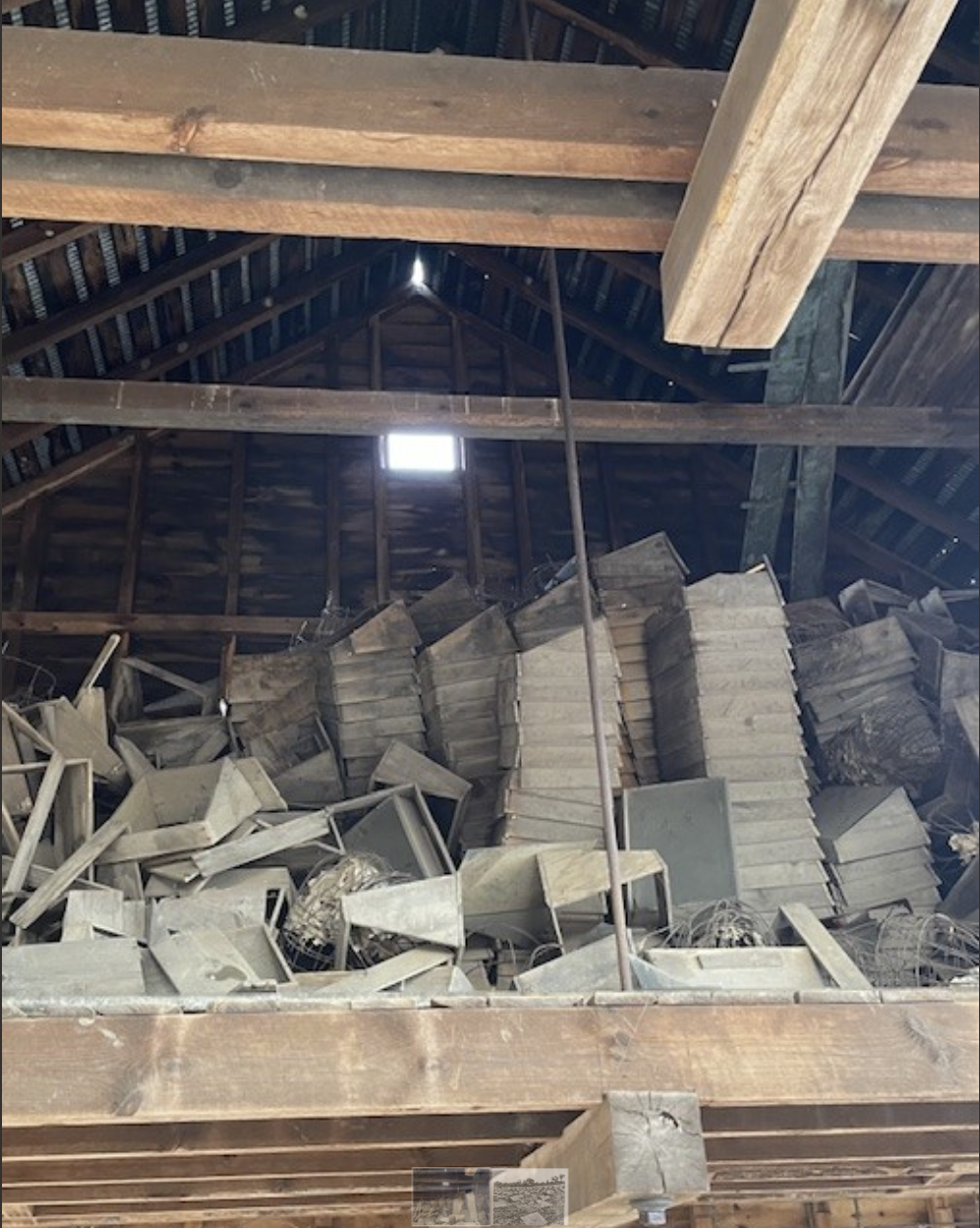
When MHLC bought the property in 2020, the cold frames were still stored in the loft of the barn, even though it had been decades since Bender Melons had been grown there.
While Bender Melons were the primary focus of the farm, Charles Bender grew other crops, including turnips, watermelon, and thousands of geraniums for sale to customers in the early summer. There were flocks of chickens for egg production and hogs were raised for meat and the manure needed to fertilize the melon fields.
In the 1930’s, after decades of intensive labor, Charles Bender decided to retire. He had no children to leave the farm to and eventually sold it to another local farmer, William Taylor. Taylor was primarily a dairy farmer, but he planned to continue to grow the famous melons. Charles guided him and revealed all of his secrets. They worked together for several years after the sale, but Taylor found it was challenging to make a profit. After all the decades of heavy production, the soils were depleted and markets had changed. After of few years, William Taylor decided to go back to what he knew best and focused on dairy farming. The era of the famous Bender Melon was over.
NOTE: References for this segment were taken from Charles Bender And The Bender Melon Farm: A Local History with permission from the author, Dennis Sullivan.


